

ISLAMABAD: The Central Development Working Party (CDWP) has approved two major projects for Pakistan Railways’ Main Line-1 (ML-1) after getting the green signal from Prime Minister Shehbaz Sharif.
The Asian Development Bank (ADB) and Asian Infrastructure Investment Bank (AIIB) will now join as financing partners in the project.
Earlier, China had refused to allow other international lenders to participate in ML-1. However, after Beijing’s hesitation to fully fund the project, Pakistan sought cost-sharing from other donors with China’s consent.
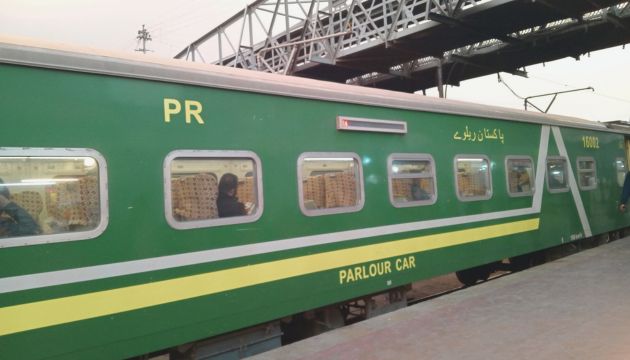
The preliminary design and drawings for ML-1 and Havelian Dry Port, costing Rs16.26 billion, have been referred to the Executive Committee of the National Economic Council (ECNEC). This move marks a major step towards modernising Pakistan’s railway network under the second phase of the China-Pakistan Economic Corridor (CPEC).
Planning Minister Ahsan Iqbal said that ML-1 is not only a railway upgrade but also Pakistan’s “leap into the 21st century.” He stressed that Pakistan must adopt modern railway systems as the world moves toward electric trains. He urged Pakistan Railways to develop a business plan and use its land assets to generate revenue for future infrastructure upgrades.
ALSO READ
Rawalpindi receives 45 electric buses, service to begin next month
The detailed engineering design for the ML-1 Rohri–Khanpur–Multan section, worth Rs3.21 billion, was also approved with ADB’s financial support. This project will further strengthen transport links under CPEC.
The CDWP meeting, chaired by Planning Minister and Deputy Chairman Planning Commission Ahsan Iqbal, approved 18 development projects across key national sectors. Twelve projects worth Rs35.4 billion were cleared at the CDWP level, while six projects worth Rs280.2 billion were sent to ECNEC for final approval.
The meeting was attended by Secretary Planning Awais Manzur Sumra, the Vice Chancellor of PIDE, the Chief Economist, and senior officials from federal and provincial departments, along with development partners.
Recognising the importance of agriculture to Pakistan’s economy, the CDWP approved several projects to modernise the sector. The Punjab Resilient and Inclusive Agriculture Transformation (PRIAT) project, worth Rs68.67 billion and funded by the World Bank and Punjab government, was referred to ECNEC.
The project will promote climate-smart farming, fair water use, stronger value chains, and digital access for small farmers.
Another project, the National Programme for Animal Disease Surveillance and Control, worth Rs7.35 billion, was approved to improve livestock health standards and boost exports.
ALSO READ
Tomato prices hit new highs across Pakistan markets
The Punjab Climate Resilient and Low Carbon Agriculture Mechanization Project (P-CLAMP), costing Rs36.12 billion and financed by ADB, was also referred to ECNEC. It aims to help small farmers access modern machinery, promote circular agriculture, and include women in agricultural development through digital registration and training.
Under governance reforms, the Punjab Resource Improvement and Digital Effectiveness (PRIDE) Programme worth Rs3.08 billion was approved. Financed by the World Bank, it will improve financial management and digital governance in Punjab by promoting transparency and efficiency.
In the health sector, three projects were approved to support universal healthcare and child welfare. These include the National Health Support Programme (Rs2.17 billion), Extension of Child Health Facilities in Southern Punjab (Rs6.40 billion) funded by JICA, and the D-TALK & Insulin for Life project (Rs1.39 billion) funded by XEM Korea.
Ahsan Iqbal emphasised that every rupee invested in health should bring real benefits to the people, adding that Pakistan must use borrowed funds responsibly as they are a trust for future generations.